
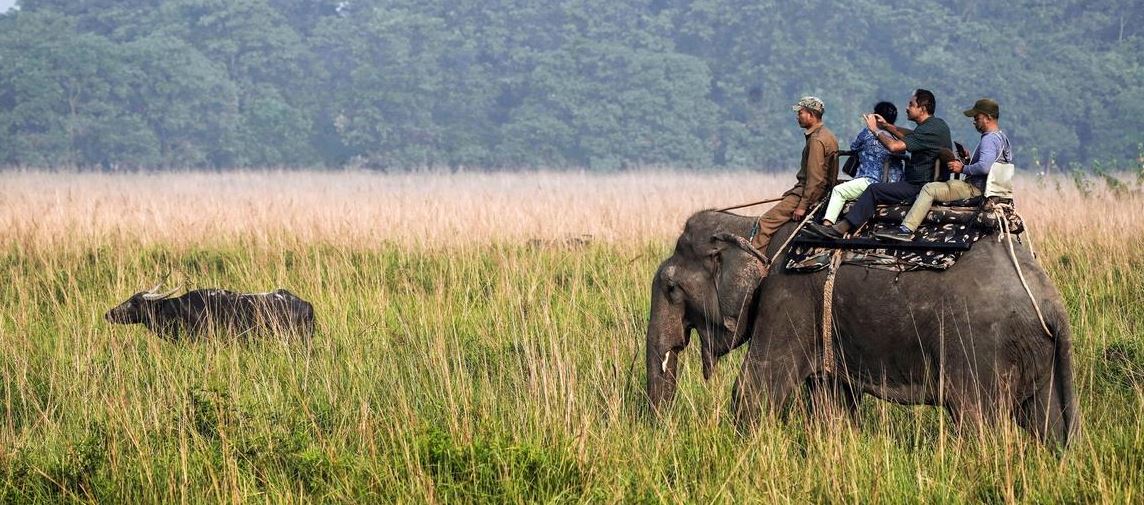
Rajaji National Park is a tranquil wildlife getaway in the Haridwar district of Uttarakhand. Not known to many, this national park does not see a bulk of tourists, but it has a lot to offer to its visitors. Rajaji National Park is located quite near Haridwar, Rishikesh and Dehradun. Therefore, the accessibility to the national park is quite easy. Travel enthusiasts, who prefer some serene exploration, can definitely choose this place for a short tour. Not only are the popular tourist destinations like Haridwar, Rishikesh and Dehradun in proximity, but there are also several other offbeat locations which you can explore along with Rajaji, if you are on a long holiday.
There were only jeep safaris available in Rajaji National Park, which are operated in the morning and evening slots. However, recently, the national park authorities have reintroduced elephant safaris after being halted for nearly 7 years. Therefore, there is an added charm and one more reason to visit Rajaji. Now, not only the jeeps but the elephants are also at your service to help you explore the landscape of Rajaji National Park.
Detailed Information about the Elephant Safaris in Rajaji
Planning a trip to Rajaji National Park feels even more exciting now, especially with the long-awaited return of the elephant safari experience. After almost 7 years, visitors can once again enjoy this slow and immersive way of exploring the forest. Many tourists and wildlife enthusiasts have already started checking Rajaji safari booking options in advance to secure their slots. The safari officially resumed on November 24, 2025, marking a special moment for wildlife tourism in the region. Earlier, the elephant ride was suspended in 2018 after a court order restricted elephant use for tourism. Later, the Supreme Court reversed the ruling in 2019, allowing the department to revive the activity.
Today, two well-trained female elephants - Radha and Rangeeli - are the heart of this renewed experience. Selected from the Cheela Elephant Camp, they have mostly been involved in surveillance and patrolling duties inside the reserve. Now, from November 15 to June 15 every year, visitors will get a chance to join them on two designated safari routes within the Chila Range. A traditional puja ceremony was held to celebrate the relaunch, adding a cultural touch to the moment.
What makes the elephant safari special is the pace. Unlike a jeep, the gentle and steady movement of an elephant offers a better view of the forest and wildlife. From the elevated seating, tourists can notice sounds, smells, and movements that are often missed during faster tours. Forest officials also emphasise that the safari supports eco-friendly tourism as it is quieter and less disruptive to wildlife.
During monsoon months, tourism pauses and the elephants return to their regular monitoring responsibilities. Authorities ensure that all safety and conservation guidelines are followed, making the experience safe, responsible, and meaningful. The purpose behind bringing back the safari goes beyond tourism - it aims to build awareness, strengthen conservation ethics, and allow visitors to connect with nature in a calm and unforgettable manner.
